

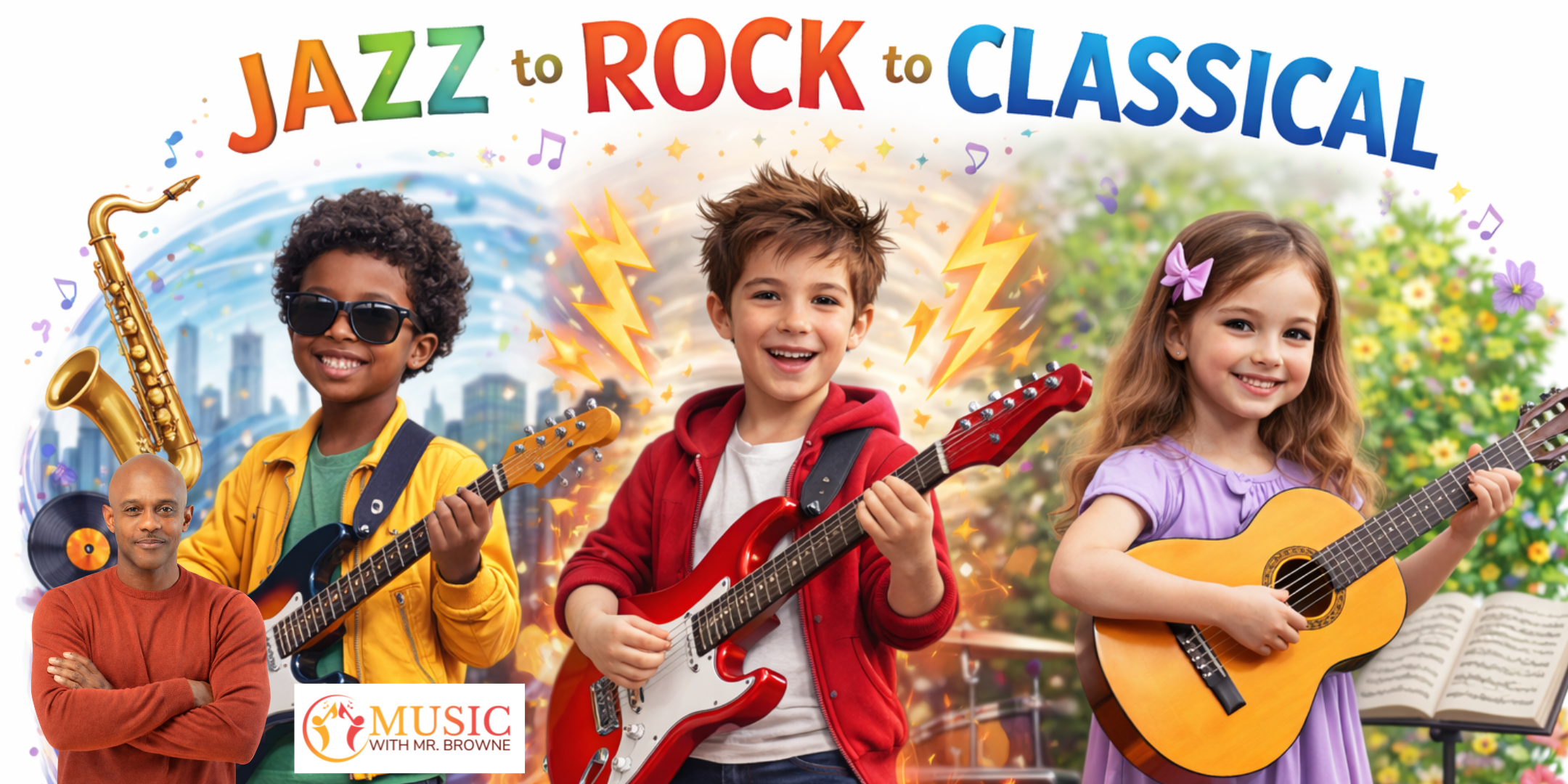
If you think back to the last time your child listened to music, you may notice something interesting.
They probably knew the song.
They may have even sung along.
They likely enjoyed it.
But if you asked:
“Is this jazz, blues, rock, or classical?”
You might have seen a pause.
And that moment tells us something important.
It’s Not That Kids Aren’t Paying Attention
Most children today are actually very connected to music.
They hear it constantly.
They respond to it naturally.
They often enjoy it deeply.
So when they don’t recognize styles like Jazz, Blues, Rock music, Country music, or Classical music…
It’s not because they aren’t capable.
It’s usually because they haven’t been shown how to listen for the difference.
The Way Music Is Often Introduced
In many situations, music is taught like this:
“This is jazz.”
“This is classical.”
“This is blues.”
And while those labels are accurate…
They don’t always create understanding.
Because for a child, those words are just names—without meaning attached to them.
And when something doesn’t have meaning…
It’s very easy to forget.
What’s Missing Isn’t Information—It’s Experience
Here’s the shift that changes everything.
Children don’t naturally connect to categories.
They connect to what they can:
- feel
- notice
- describe
So instead of remembering:
“This is classical music…”
They are far more likely to remember:
“This sounds calm.”
“This feels dramatic.”
“This makes me want to move.”
And once that connection is made…
The label begins to make sense.
Why This Matters More Than It Seems
When children don’t learn to recognize musical styles, something subtle happens.
Music stays on the surface.
They enjoy it…
but they don’t explore it.
They hear it…
but they don’t understand it.
And over time, this can limit how deeply they engage.
Because without understanding…
It’s harder to stay curious.
A Different Way to Approach It
Now imagine a different experience.
A child hears two pieces of music.
One feels smooth and expressive.
The other feels steady and structured.
Instead of being told what they are…
They are asked:
“What do you notice?”
“How are these different?”
And as they begin to describe what they hear…
They start building awareness.
And once that awareness is there…
Introducing the idea of “jazz” or “classical” suddenly feels natural.
What You May Begin to Notice
As children start to recognize differences in music, parents often notice:
They become more engaged during lessons
They ask more questions
They begin to describe what they hear with confidence
And something important begins to develop…
Their ability to make sense of music on their own
A Simple Shift You Can Try
You might try this the next time music is playing:
Ask your child:
“Does this sound more relaxed… or more energetic?”
“Does this feel like something you would sit and listen to… or move to?”
And just notice what they say.
Because in that moment…
They are beginning to build the skill that allows music to go from something they hear…
To something they understand.
Final Thought
Children don’t need more music in their lives.
They already have plenty of it.
What they need… is a way to connect with what they’re hearing.
And as that connection begins to form…
You may start to notice that their interest doesn’t need to be pushed.
It begins to grow naturally.