

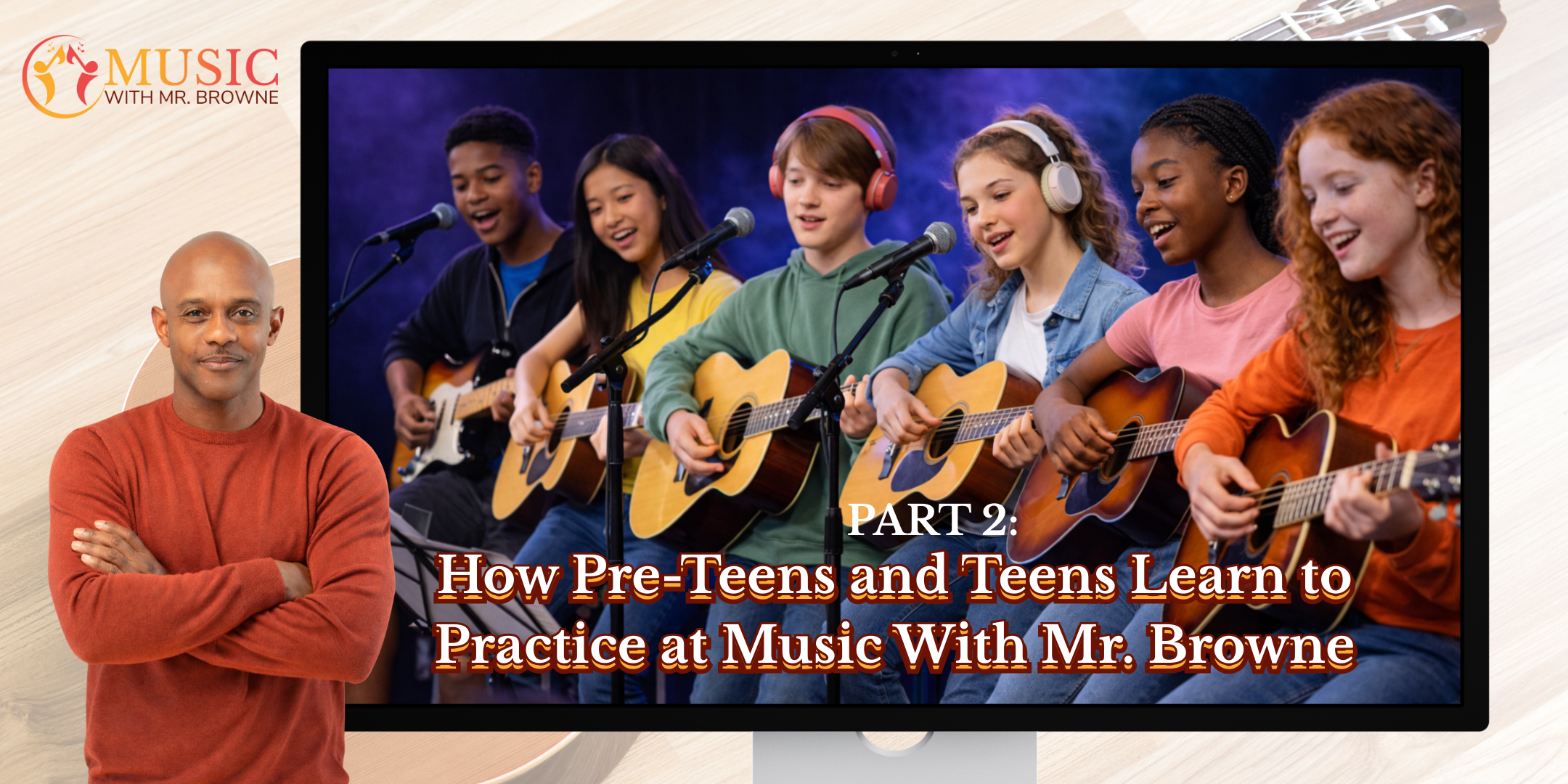
How Pre-Teens and Teens Learn to Practice at Music With Mr. Browne
Introduction
As students grow, practice begins to shift.
At this stage, students are no longer just building habits — they are beginning to build musicianship.
Practice for ages 11–18 moves from:
- Guided habit-building to
- Independent problem-solving
Practice Becomes Strategic
Students at this level must begin asking:
- What exactly is not working?
- Why is this section difficult?
- Is this a rhythm issue, fingering issue, or coordination issue?
- What small step can fix it?
This is where practice becomes analytical.
We begin teaching students to:
- Break passages into sections
- Identify specific technical problems
- Use slow tempo intentionally
- Repeat with purpose (not mindlessly)
Building Musical Awareness
At this stage, students begin thinking about:
- Tone quality
- Dynamics
- Phrasing
- Expression
- Style
They learn that music is not just notes — it is communication.
Ownership and Responsibility
Teen students must begin taking responsibility for their own progress.
Effective practice now includes:
- Goal setting
- Tracking improvement
- Using a metronome correctly
- Managing time independently
Parents shift from supervisors to supporters.
The Bigger Goal for Ages 11–18
We are preparing students not just to play pieces — but to think like musicians.
This stage develops:
- Critical listening
- Emotional expression
- Discipline
- Musical identity
This is where students begin discovering their artistic voice.
.